RWID Multimodal · Pre-built research cohorts
GLP-1 Longitudinal Outcomes & Biomarkers Cohort
A large-scale real-world dataset integrating longitudinal clinical, imaging, and outcomes data for patients receiving GLP-1–based therapies — including semaglutide, tirzepatide, liraglutide, and dulaglutide — across care settings.
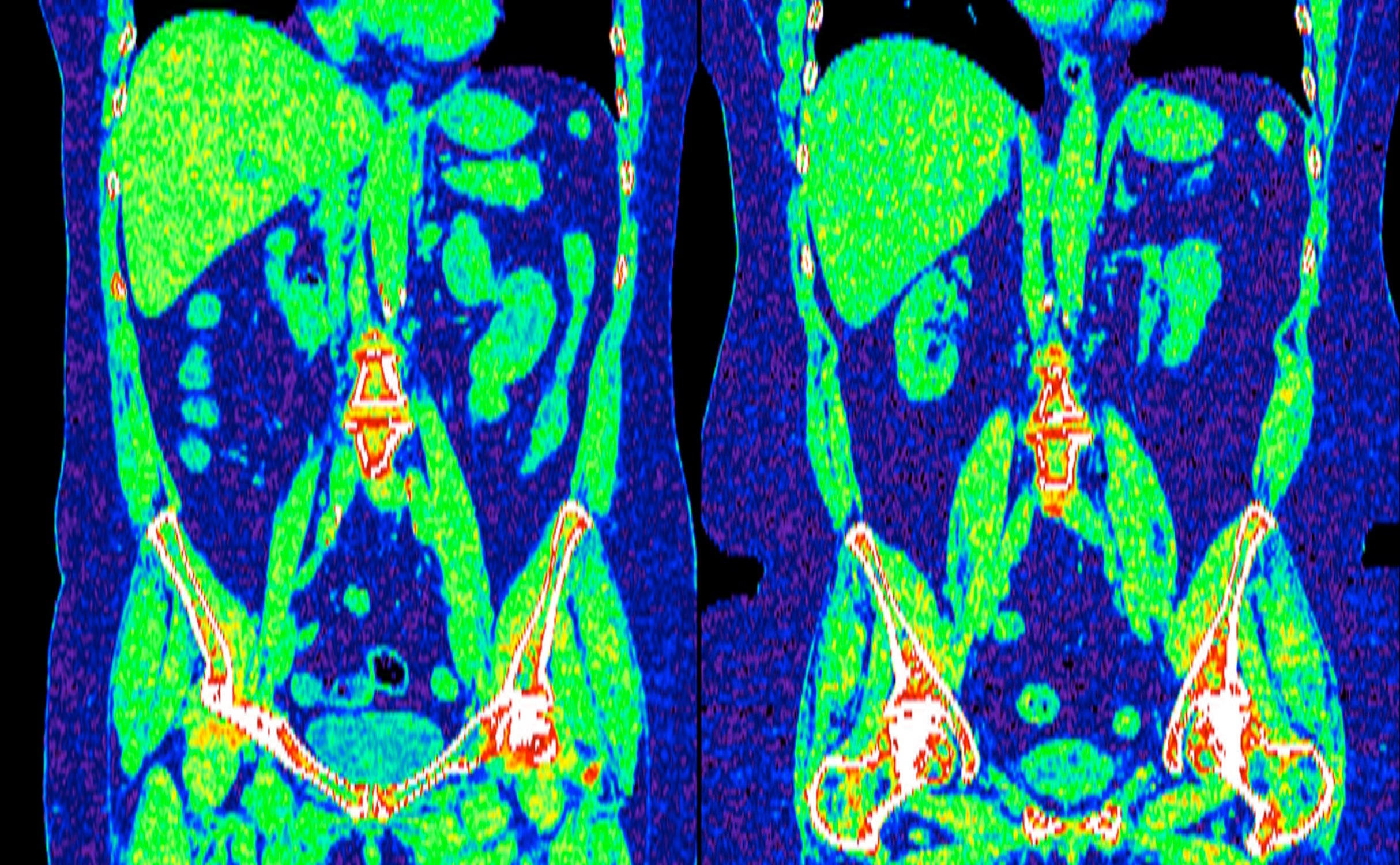
CT abdomen (NIH color map) showing body composition changes pre- and post-GLP-1 treatment. Visceral and subcutaneous fat distribution visualized longitudinally. De-identified.
5,900
Patients in cohort
2017–25
Time frame coverage
25+
Imaging-derived biomarkers
available for selection
available for selection
Quarterly
Data refresh cycle
Dataset Specifications
What is in the GLP-1 and Body Composition Imaging Dataset
Structured EHR elements linked to imaging data and quantitative biomarkers, with timestamps aligned to treatment initiation and follow-up.
Therapeutic Area
Endocrinology & Metabolism
Disease Focus
Obesity · Type 2 Diabetes (T2D) · Obesity or overweight with comorbidity · T2D with inadequate glycemic control or CV risk
Treatment Types
GLP-1 receptor agonists · Dual GIP/GLP-1 receptor agonists
Imaging Modalities
DEXA (body composition, bone mineral) · MR abdomen (PDFF, elastography) · CT abdomen · CT coronary arteries · CT chest · US abdomen/liver
Clinical Data (EHR)
Demographics · diagnoses · procedures · medications · pharmacy dispensing · labs (HbA1c, lipids, liver enzymes)
Data Sources
Internal medicine · primary care · endocrinology · pharmacy dispensing · radiology (DICOM) · laboratory
Data Format & Compliance
Raw DICOMs and standardized derived measures · HIPAA de-identified · Provenance documentation built into acquisition · Timestamps aligned to treatment initiation and follow-up
Therapies Presented
GLP-1 and dual agonist therapies in the cohort
The dataset covers patients receiving the following therapies, enabling comparative effectiveness analyses across molecules and formulations.
Semaglutide
Ozempic® · Wegovy® · Rybelsus®
GLP-1 RA
Tirzepatide
Mounjaro® · Zepbound®
GIP / GLP-1 RA
Liraglutide
Victoza® · Saxenda®
GLP-1 RA
Dulaglutide
Trulicity®
GLP-1 RA
Applications
What this dataset enables
From longitudinal outcomes assessment to AI model development.
Longitudinal body composition assessment
Track GLP-1 effects on visceral fat, lean mass, and metabolic biomarkers over time, with imaging timestamps aligned to treatment initiation and follow-up milestones.
MASLD progression & regression
Characterize progression or regression of metabolic dysfunction-associated steatotic liver disease via PDFF, elastography, and liver steatosis grading across treatment cohorts.
Cardiovascular risk via imaging biomarkers
Assess coronary artery calcium, aortic calcification, and epicardial adipose tissue changes as cardiovascular surrogate endpoints in GLP-1 treated populations.
Comparative effectiveness
Assess coronary artery calcium, aortic calcification, and epicardial adipose tissue changes as cardiovascular surrogate endpoints in GLP-1 treated populations.
Treatment response prediction
Build predictive models using baseline imaging phenotypes to identify which patients are most likely to respond to specific GLP-1 therapies.
Safety monitoring & AI model development
Monitor muscle loss, hepatic changes, and bone density in real-world populations. Develop AI models for automated imaging feature extraction in cardiometabolic disease.
Biomarkers & Endpoints
25+ imaging-derived quantitative biomarkers available for selection
Both raw DICOMs and standardized derived measures, with timestamps aligned to treatment initiation and follow-up. Biomarker selection is tailored to your programme's endpoints and therapeutic objectives.
Body Composition
- Visceral adipose tissue (VAT) volume
- Subcutaneous adipose tissue (SAT) volume
- VAT/SAT ratio
- Total fat mass & lean mass
- Total body fat %
- Regional fat/lean mass
- Waist circumference
Musculoskeletal
- L3 skeletal muscle area
- Muscle attenuation (HU)
- Muscle fat infiltration (myosteatosis)
- Bone mineral density (BMD)
- Vertebral trabecular attenuation (L1)
Hepatic
- Liver fat fraction (PDFF)
- Liver stiffness (MR elastography)
- Liver attenuation (HU)
- Liver steatosis grading
- Liver stiffness (transient elastography)
- CAP (controlled attenuation parameter)
- Pancreatic fat fraction
Cardiovascular
- Coronary artery calcium (Agatston score)
- Aortic calcification
- Epicardial adipose tissue (EAT) volume
- Whole-body fat fraction
Dataset Request
Request access to RWID Multimodal cohorts
Receive technical specifications for the pre-built research cohort relevant to your programme.
Book a technical call


